

Since the beginning of civilization, humans have built to live, work, connect, and trade. Over the centuries, we’ve constantly sought to build faster, stronger, and today, more sustainably.
The construction industry is a key sector of the global economy. It alone represents between 7% and 11% of the world’s GDP and employs around 10% of the global workforce. In 2022, the global construction market was valued at USD 10.7 trillion and is expected to grow by USD 4.5 trillion between 2020 and 2030, reaching USD 15.2 trillion by 2030.
Structured around two main segments, building construction and civil engineering, the sector covers everything from residential, commercial, and industrial buildings to large-scale infrastructure such as roads, bridges, tunnels, and dams. At the heart of human activity, construction is an economic powerhouse that can no longer ignore environmental realities and constraints.
Understanding the Environmental Challenge
No human activity is entirely neutral. Yet some have an inherently greater ecological footprint, and construction is one of them. By its very nature, this industry impacts the environment as it shapes territories and, consequently, the soils and ecosystems within them.
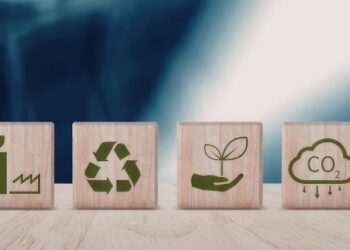
Moreover, the extraction of materials such as sand, wood, and metals not only emits CO₂ but also contributes to soil erosion. Cement production, a key ingredient in concrete, is one of the largest sources of carbon dioxide emissions worldwide.
Construction also generates considerable waste, from demolition to on-site operations. Finally, buildings themselves consume large amounts of energy throughout their life cycle, for heating, cooling, and lighting, increasing demand for non-renewable energy and greenhouse gas emissions.
Accelerating the Shift Toward Sustainability
Across the globe, governments and regulatory bodies are working to accelerate the sustainable transition of the construction industry. From China’s goal of carbon neutrality by 2060, to the European Union’s commitment to reach net zero by 2050 and cut greenhouse gas emissions by at least 50% by 2030 compared to 1990 levels, to the United States rejoining the Paris Climate Agreement under President Joe Biden and pledging to reduce CO₂ emissions substantially by 2030 compared to 2005, the global momentum is clear.
This collective effort is also supported by the United Nations through its Sustainable Development Goals.
In France, the implementation of the Réglementation Environnementale 2020 (RE2020) and the Zero Net Land Take (ZAN) initiative perfectly illustrate the urgency of transformation driven by legislation.
Digital Innovation at the Heart of Transformation
Digital tools and especially virtual twins are key drivers of the ongoing revolution in the construction industry. They bring a host of crucial benefits that enhance every stage of the building process.
Detailed 3D modeling, numerical simulation, and, above all, the virtual twin, open new perspectives by providing accurate, data-driven insights even before the first stone is laid. By simulating real-world conditions early in the design phase, errors are significantly reduced. Even better, environmentally responsible alternatives can be evaluated and tested to identify the most efficient and sustainable options, minimizing waste and reducing the overall environmental footprint.
On the 3DEXPERIENCE platform, integrated digital solutions foster seamless coordination between all stakeholders thanks to their inherently collaborative nature. Designers can test eco-friendly materials, energy-efficient systems, and sustainable water management solutions — all within a shared data environment. The result: improved collaboration, better project coordination, and enhanced on-site safety.
Through virtual twins and immersive virtual reality training, field teams can also experience safer and more engaging work environments.
Designing, Manufacturing, and Building Responsibly
Construction is a long value chain from design offices to on-site workers, where every link plays a critical role in achieving sustainability. Every detail matters.
Life Cycle Assessments (LCAs) consider every stage of a project, from early design phases to waste recycling and long-term building operation.
The holistic project vision enabled by virtual twins and centralized on the 3DEXPERIENCE platform marks the starting point for a more sustainable, more responsible construction process. Because every impact matters and every improvement counts collaborative digital solutions provide a granular view of a building’s environmental footprint… and, above all, the means to improve it.
Case Study: ASSEMBLY OSM — Rethinking Skyscraper Construction

Assembly OSM is transforming high-rise construction through a process called productization. Combining digital design, advanced manufacturing, and on-site assembly, the company creates tailor-made buildings designed for dense urban environments — addressing housing shortages and rising material costs with efficiency and creativity.
Their innovative off-site prefabrication system produces customizable, high-end modules assembled in a “cascade” before delivery. In cities like New York, where truck movement is tightly regulated, this streamlined approach allows for single-trip deliveries and faster, cleaner construction.
Using | 3DEXPERIENCE Cloud platform, Assembly OSM achieves full digital continuity from design to manufacturing. The platform enhances collaboration, controls costs and timelines, and enables model reuse helping the company reduce both environmental impact and operational complexity.
Explore Assembly OSM’s customer success story on our dedicated page.
Discover Dassault Systèmes’ vision and commitment to sustainable construction on their dedicated blog page.